Food Allergy Overview
Praana Center for Asthma and Allergy
Food allergies affect millions of Americans and are more common than many people realize. Nearly 6% of adults and children in the United States live with a food allergy, and many more experience unexplained reactions that warrant evaluation.
Food allergies are most often diagnosed in infancy and childhood, but they can develop at any age—even to foods you have eaten safely for years. If you experience nausea, swelling, hives, dizziness, or breathing symptoms after eating, it is important to be evaluated by a board-certified allergist.
At Dr Samyukta Koppula’s office at Praana Center for Asthma and Allergy, we specialize in the accurate diagnosis and personalized management of food allergies for both children and adults.
How Food Allergies Develop
Your immune system is designed to protect you from harmful substances such as infections. A food allergy occurs when the immune system mistakenly identifies a specific food or food protein as a threat and triggers an allergic reaction.
While allergies can run in families, it is not possible to predict whether a child will inherit a parent’s food allergy or whether siblings will be affected in the same way. Research suggests, however, that younger siblings of children with peanut allergy may be at higher risk.
Importantly, food allergy reactions are unpredictable. A mild reaction in the past does not guarantee that future reactions will also be mild.
Severity of Food Allergy Reactions
Food allergy symptoms can range from mild to life-threatening. The most severe form of allergic reaction is anaphylaxis, a whole-body reaction that can:
Impair breathing
Cause a sudden drop in blood pressure
Affect heart rate
Lead to shock
Anaphylaxis can occur within minutes of exposure and is a medical emergency. It must be treated promptly with epinephrine (adrenaline).
Common Food Allergens
Although any food can trigger an allergic reaction, approximately 90% of food allergies are caused by the following:
Eggs
Milk and dairy
Peanuts
Tree nuts
Fish
Shellfish
Wheat
Soy
Sesame
Sesame is now recognized as the 9th major food allergen in the United States. Under the FDA’s FASTER Act of 2021, sesame must be labeled as a major allergen beginning January 1, 2023. Sesame is commonly found in foods such as hummus, often listed as “tahini,” and may be hidden in spice blends or natural flavorings.
Symptoms of Food Allergic Reactions
Food allergy symptoms may involve one or more body systems, including the skin, gastrointestinal tract, respiratory system, and cardiovascular system. Symptoms may include:
Vomiting or stomach cramps
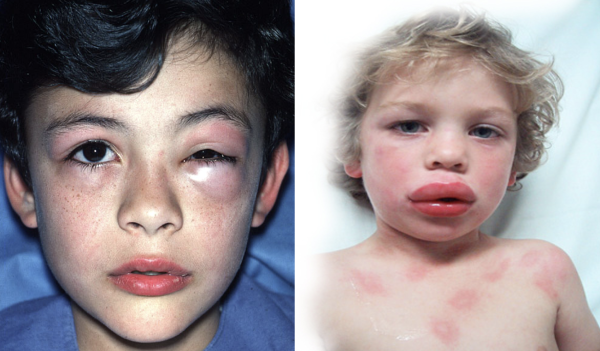
Hives or skin rash
Shortness of breath
Wheezing or repetitive coughing
Tight or hoarse throat; difficulty swallowing
Swelling of the tongue or lips
Dizziness or fainting
Weak pulse
Pale or bluish skin
Shock or circulatory collapse
Anaphylaxis, a potentially life-threatening reaction affecting multiple systems at once
Most reactions occur within minutes to two hours after eating the trigger food. Rarely, symptoms may be delayed for several hours.
Delayed Food Allergy Reactions
Some food allergy reactions present later and may be more difficult to recognize:
Eczema-related delayed reactions, most often seen in children
Red meat allergy (alpha-gal syndrome), associated with lone star tick bites
Food Protein-Induced Enterocolitis Syndrome (FPIES), a serious gastrointestinal food allergy typically affecting infants
FPIES usually occurs two to six hours after ingestion and can cause repetitive vomiting, dehydration, and in some cases bloody diarrhea. FPIES is a medical emergency and requires prompt evaluation and IV rehydration
When to See an Allergist
If you or your child experience symptoms after eating—especially swelling, hives, vomiting, or breathing difficulty—it is time to see an allergist.
At Praana Center for Asthma and Allergy, we offer comprehensive food allergy evaluation, including testing, diagnosis, emergency action planning, and long-term management tailored to your lifestyle and family needs.
Schedule an appointment today to take the next step toward clarity, safety, and peace of mind.When to See an Allergist
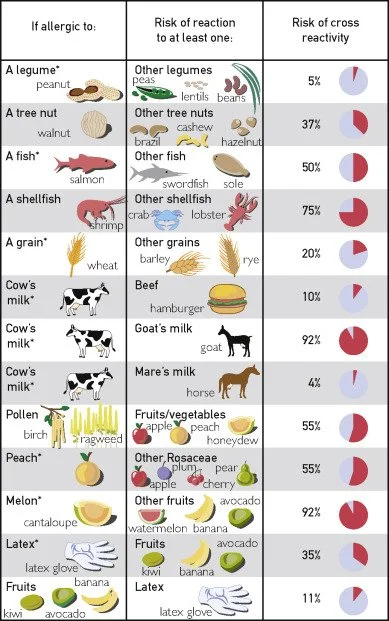
Cross Reactivity
individuals may also experience cross-reactivity, meaning a reaction to related foods within the same family (for example, shrimp and crab, or different tree nuts). Determining whether a patient truly needs to avoid related foods requires expert evaluation and cannot be based on testing alone.
Why Specialized Allergy Care Matters
Interpreting food allergy testing is complex. Skin and blood tests can sometimes be positive even when a food is safely tolerated. At our practice, we carefully combine:
Detailed medical history
Symptom patterns
Test results
Prior food exposures
This approach helps us avoid unnecessary food restrictions while keeping patients safe.
When results are unclear, an oral food challenge, performed under strict medical supervision, is often the most accurate way to determine whether a food allergy truly exists or has been outgrown.
Food Allergy Testing and Diagnosis
Diagnostic tools may include:
Skin prick testing, with results available during the visit
Blood testing (food-specific IgE) when appropriate
Oral food challenges, when history and testing are inconclusive or to assess whether an allergy has resolved
Oral Food Challenges
An oral food challenge is considered the gold standard for diagnosing food allergies. During this test, small, gradually increasing amounts of the suspected food are given under close medical supervision, followed by observation.
Because of the possibility of a reaction, oral food challenges are performed only in a medical setting with emergency medications and equipment readily available.
Managing Food Allergies Safely
The primary treatment for food allergy is strict avoidance of the trigger food. We work closely with patients and families to help them:
Understand food labels
Recognize hidden ingredients
Navigate restaurant dining safely
Develop an emergency action plan
Patients with food allergies are prescribed epinephrine auto-injectors and are taught exactly when and how to use them. Epinephrine is the first-line treatment for anaphylaxis and should be used immediately when severe symptoms occur.
Newer Treatment Options
Certain patients may be candidates for newer therapies, such as omalizumab (Xolair), which can help reduce allergic reactions to food when used as ongoing treatment. This medication does not replace avoidance or emergency care and must be discussed carefully with an allergist.
Food Allergy Care for Families
Food allergies can significantly affect daily life, especially for children. We help families coordinate care plans for:
School
Daycare
Extracurricular activities
Travel
Clear communication and education are central to keeping children safe and allowing them to participate fully in daily activities.
Serving Hinsdale and Surrounding Communities
Praana Center for Asthma and Allergy is located in Willowbrook, Illinois, and serves patients from Hinsdale, Clarendon Hills, Oak Brook, Downers Grove, and nearby suburbs. We welcome both children and adults seeking thoughtful, evidence-based food allergy care.