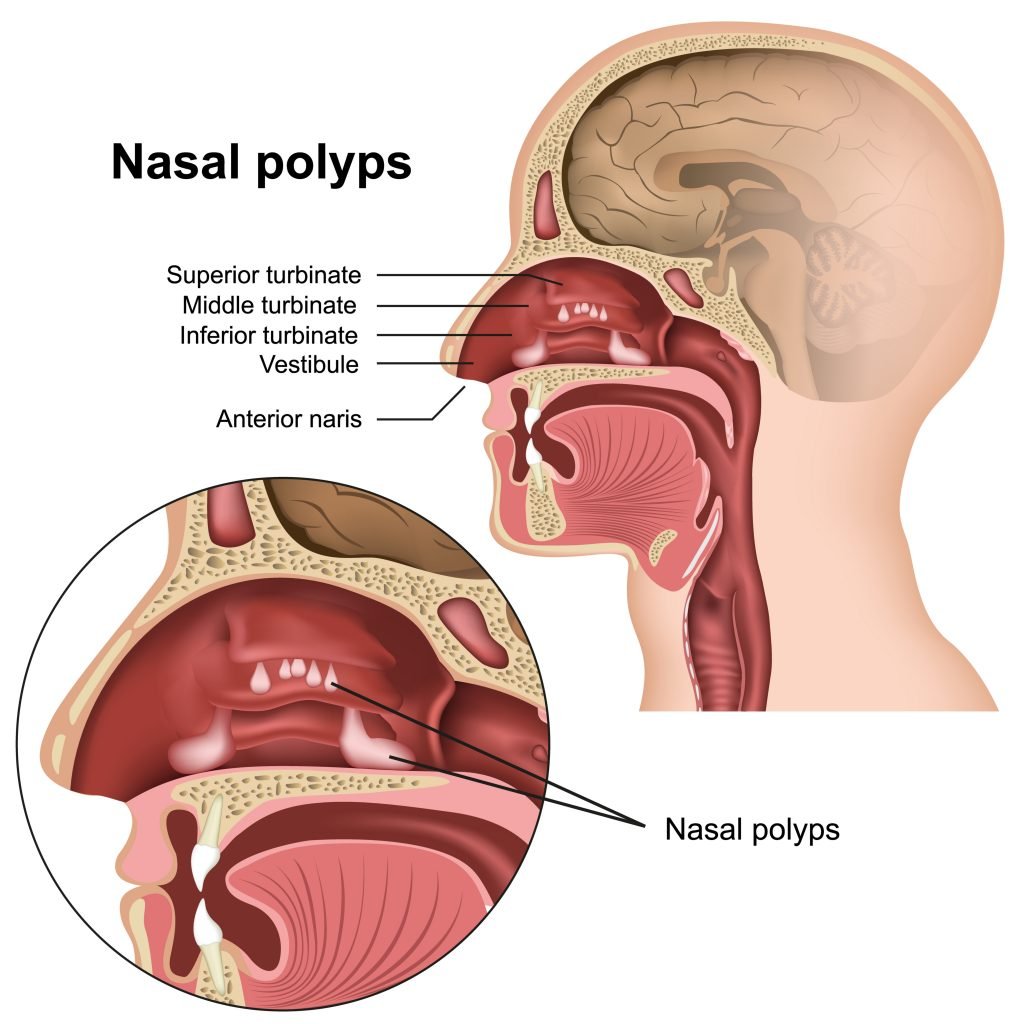
Nasal Polyps (Chronic Rhinosinusitis with Nasal Polyps)
Nasal polyps are soft, noncancerous growths that develop inside the nasal passages and sinuses as part of chronic inflammation. They are commonly seen in people with chronic rhinosinusitis and can cause persistent nasal congestion, sinus pressure, and loss of smell. At Praana Center for Asthma and Allergy, we evaluate nasal polyps in the context of underlying inflammation and associated conditions to create a personalized, long-term treatment plan.
Nasal polyps are soft, noncancerous growths that develop inside the nasal passages and sinuses as part of chronic inflammation. They are commonly seen in people with chronic rhinosinusitis and can cause persistent nasal congestion, sinus pressure, and loss of smell. At Praana Center for Asthma and Allergy, we evaluate nasal polyps in the context of underlying inflammation and associated conditions to create a personalized, long-term treatment plan.
-
Nasal polyps are benign inflammatory growths that usually arise from the sinuses, most commonly the ethmoid sinuses. They are typically present on both sides of the nose. Polyps affecting only one side require further evaluation to rule out other conditions.
Nasal polyps most often develop in adulthood, usually in the 30s or 40s, and are associated with long-standing inflammation of the nasal and sinus lining.
-
The exact cause of chronic rhinosinusitis with nasal polyps (CRSwNP) is not fully understood. In many patients, nasal polyp tissue shows high levels of eosinophils, a type of inflammatory cell often associated with allergic-type immune responses. Certain bacteria, including Staphylococcus aureus, may also contribute to ongoing inflammation.
-
Symptoms typically last longer than 12 weeks and may include:
Persistent nasal congestion or blockage
Thick nasal drainage
Facial pressure or sinus discomfort
Decreased or lost sense of smell
Reduced sense of taste
Among these, nasal congestion and loss of smell are often the most bothersome symptoms.
-
Diagnosis is based on:
A detailed medical history
Physical examination of the nose
Nasal endoscopy to directly visualize polyps
Sinus CT scan to assess the extent of sinus involvement
Imaging helps distinguish chronic sinus disease with polyps from chronic sinusitis without polyps and guides treatment planning.
-
Nasal polyps frequently occur alongside other medical conditions that can affect disease severity:
Asthma
Asthma is present in approximately 25–50% of patients with nasal polyps.Aspirin-Exacerbated Respiratory Disease (AERD)
Some patients with asthma and nasal polyps experience worsening nasal or breathing symptoms after taking aspirin or other NSAIDs. This condition tends to be associated with more severe sinus disease.Allergic Fungal Rhinosinusitis (AFRS)
A subset of patients develop an allergic reaction to inhaled fungi, leading to thick nasal discharge and characteristic imaging findings. Surgery is often required in these cases.Cystic Fibrosis
While nasal polyps usually occur in adults, their presence in children should prompt evaluation for cystic fibrosis. -
Treatment focuses on:
Reducing nasal and sinus inflammation
Shrinking or eliminating polyps
Improving nasal airflow and sense of smell
Preventing recurrence
Reducing the need for repeated oral steroids or surgery
-
Topical Therapy
Daily nasal saline rinses
Nasal steroid sprays for long-term inflammation control
Large-volume steroid rinses, which are often more effective than sprays
Short-Term Oral Steroids
Short courses of oral corticosteroids can temporarily shrink polyps and improve smell but are used cautiously due to potential side effects.Advanced Steroid Delivery
Exhalation-delivery steroid devices
Steroid-eluting sinus stents placed by ENT surgeons
-
Biologic medications target specific inflammatory pathways and are FDA-approved for patients with moderate to severe CRSwNP. These injections are given every 2–4 weeks and can:
Reduce polyp size
Improve sense of smell
Decrease need for surgery
Reduce reliance on oral steroids
Approved biologics include dupilumab, mepolizumab, omalizumab, and tezepelumab.
-
Endoscopic sinus surgery may be recommended if symptoms remain severe despite optimal medical therapy. Surgery improves sinus drainage and medication delivery but does not cure the underlying inflammation. Ongoing medical treatment is usually required after surgery to prevent recurrence.
-
Item description
Collaborative Care
Nasal polyps are often best managed with a team approach, involving both allergists and otolaryngologists (ENT specialists), particularly in patients with asthma or severe disease.