Personalized Asthma Care
We frequently care for patients from Hinsdale, Clarendon Hills, Oak Brook, and surrounding suburbs who are seeking specialized asthma management. Our Willowbrook location provides convenient access to board-certified allergy and asthma care.
If you or you child are having asthma symptoms, get state of the art care with testing, evaluation and treatment at Dr Koppula’s office. Breathe easier, sleep better and have peace of mind!
Asthma Diagnosis and Treatment for Children and Adults
Asthma is a chronic respiratory disease. Symptoms include tightness in the chest, wheezing especially if you get a cold, coughing , shortness of breath and fatigue. It can go undiagnosed for many years, masquerading as bronchitis or just thinking one is out of shape. Subtle symptoms may be night time awakenings, phlegm in the back of the throat increased shortness of breath with exercise or a reluctance to do aerobic exercise like running. In children they may chose more sedentary activities to gym class. Struggling with the pacer test at school may be a revealing symptom.
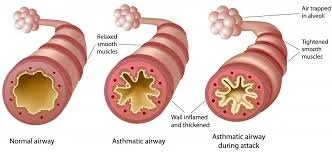
Asthma, also known as reactive airway disease, is defined as a chronic lung condition with:
Inflammation (swelling of the airways)
Increased sensitivity of the airways to a variety of things that make asthma worse
Obstruction of airflow
Inflammation
Recent research has shown that inflammation of the lining of the airways is the most common feature of asthma. When they are stimulated, certain cells lining the airways release chemical substances (mediators) that lead to inflammation. This causes the airway lining to swell and narrow. The inflammation may last for hours, days or weeks following an episode. Most people with asthma have some degree of inflammation all of the time. At Dr Koppula’s office these triggers can be identified with skin tests or blood tests and many state of the art medications can be prescribed to prevent and reduce inflammation.
Increased Sensitivity
Another characteristic of asthma is increased sensitivity of the airways. When inflammation occurs in the airways, they become more sensitive (or "twitchy"). When the airways are more sensitive, you are more likely to have asthma symptoms when exposed to things that can make asthma worse like dust mites, molds, animal dander, viral infections and even some foods and pollen.
Airway Obstruction
In addition to the swelling that occurs as a result of inflammation, further airway obstruction sometimes occurs with asthma. Obstruction is caused by the tightening of muscles that surround the airways. This is also called bronchospasm. Bronchospasm causes further narrowing of the inflamed airways. Inhaled quick-relief medications are generally very effective in reversing bronchospasm.
In most people with asthma, the mucous glands in the airways produce excessive, thick mucus, which further obstructs the airways and causes coughing
If you or your child has asthma, you’re not alone. In the United States, asthma affects 25 million people, including 6 million children, making it the most common chronic disease of childhood.
With proper understanding, good medical care and monitoring, you and your child can keep asthma under control. Our treatment goal at Dr Koppula’s office at Praana Center for Asthma and Allergy is to teach patients and families how to manage asthma, so that they can lead full and productive lives.
In the past we only had corticosteroids and theophylline to control asthma which have severe side effects. With the current newer medications we can drastically reduce oral and inhaled steroid use.
Newer biological medications like omalizumab, tezepelumab, mepolizumab, benralizumab, dupilumab and others have changed the face of severe asthma. With these newer medications and carefully monitoring triggers, its a rare patient that needs hospitalization or oral steroids for asthma.
Immunotherapy or allergy shots can also be an effective treatment for allergic asthma.
Asthma Attack warning signs
Early warning signs are experienced before the start of an asthma attack. By recognizing these clues, people with asthma can have a head start on treatment. These signs can be different for each person and can change between attacks. Some early warning signs may be noticed only by the individual experiencing them, while other early warning signs are more likely to be noticed by others. In addition, a downward trend in peak flow numbers can be a reliable early warning sign. Some examples of early warning signs are below:
Breathing changes
Signs of viral illness or allergies (sneezing, runny/stuffy nose, headache, dark circles under eyes, ear/throat itching) since viruses and allergies are common triggers for asthma attacks.
Moodiness
Coughing
Feeling tired
Trouble sleeping
Poor tolerance for exercise
Downward trend in peak flow number
Asthma Attack Symptoms
Asthma symptoms can indicate that an asthma attack is occurring. Changes have taken place in the airways, and airflow is obstructed. People with asthma should take action to treat these symptoms before they become worse. Talk with Dr Koppula about having a written asthma action plan. Examples of asthma symptoms include:
Wheezing
Coughing
Shortness of breath
Tightness in the chest
Peak flow numbers in the caution or danger range (usually 50% to 80% of personal best)
Severe Asthma Attack Symptoms
Severe asthma symptoms are a life-threatening emergency. If any of these severe asthma symptoms occur, seek emergency medical treatment right away, since these symptoms indicate respiratory distress. Examples of severe asthma symptoms include:
Severe coughing, wheezing, shortness of breath or tightness in the chest
Difficulty talking or concentrating
New shortness of breath even while walking
Breathing that is shallow and fast or that is slower than usual
Hunched shoulders (posturing)
Nasal flaring (nostril size increasing with breathing)
Inward movement of the neck and the area between or below the ribs with breathing (retractions)
Gray or bluish tint to skin, beginning around the mouth (cyanosis)
Peak flow numbers in the danger zone (usually below 50% of personal best). You can learn more about the importance of peak flow monitoring here.
There are various types of asthma, including:
Exercise-induced asthma
Nocturnal asthma
Occupational asthma
Steroid-resistant asthma
Allergic asthma
Cough-variant asthma
Eosinophilic asthma
Exercise-Induced Asthma
Exercise commonly makes asthma symptoms worse. With treatment and monitoring, people with exercise-induced asthma symptoms can continue to participate in physical activities. The more inflamed the airways, the less exercise it takes to cause symptoms.
Nocturnal Asthma
The worsening of asthma at night is very common, and treating the underlying causes can provide significant help. As with exercise, when asthma is a problem at night, it usually means that the inflammation in the airways is worse.
Occupational Asthma
Workplace exposure to certain chemicals or dusts can induce asthma. These substances can be an irritant to the airways, or exposures can cause an allergic type of reaction. Quick recognition and control of workplace exposures is important, as is using the appropriate protective equipment.
Steroid-Resistant Asthma (Severe Asthma)
While the majority of patients respond to regular inhaled glucocorticoid (steroid) therapy, some people are steroid-resistant. These people do not respond sufficiently to steroids at normal doses. Speak with your health care provider about an action plan for working with this type of asthma.
Allergic Asthma
Allergies can make asthma symptoms worse. Therefore, it is best to avoid the things to which you are allergic. .
Cough-Variant Asthma
Cough-variant asthma produces a dry cough (without expelled mucus). People with cough-variant asthma often do not present with other conventional asthma symptoms, such as wheezing or shortness of breath.
Eosinophilic Asthma
Eosinophilic asthma involves the increase of the blood cell eosinophil in the lung tissue and mucus. This causes patients to experience chronic sinus disease and nasal polyposis. The higher number of eosinophil is also related to a risk for more frequent or severe asthma attacks.
Asthma Associated Conditions
There are multiple conditions associated with heightened asthma symptoms. There are also several conditions, such as vocal cord dysfunction (VCD), that can be mistaken for asthma in certain cases. As always, it’s best to consult with your doctor to determine whether your current condition may be worsening aspects of your asthma.
Pregnancy and Hormonal Changes
Some women with asthma have increased symptoms at a particular time during their menstrual cycle, such as pre-menstruation, or during pregnancy. This worsening results from a change in the balance of hormones that is occurring at that time.
Gastroesophageal Reflux
Gastroesophageal reflux, or GERD, occurs when the acidic contents of the stomach flow back up into the esophagus. This stimulates a reflex that may cause asthma to worsen. Symptoms of heartburn and breathing difficulty at night can indicate GERD.
Vocal Cord Dysfunction
Vocal cord dysfunction (VCD) symptoms occur at rest or during exercise and can be mistaken for asthma. Similar to asthma, VCD causes difficulty breathing, which can be severe in some cases.
Chickenpox
Chickenpox (varicella) used to be one of the most common childhood viral diseases. It’s also a condition that can aggravate asthma symptoms, causing severe respiratory issues in some cases. Although chickenpox is highly contagious, it can be prevented with a safe and effective vaccine. If your child has asthma and contracts chickenpox, make sure to contact your doctor immediately.