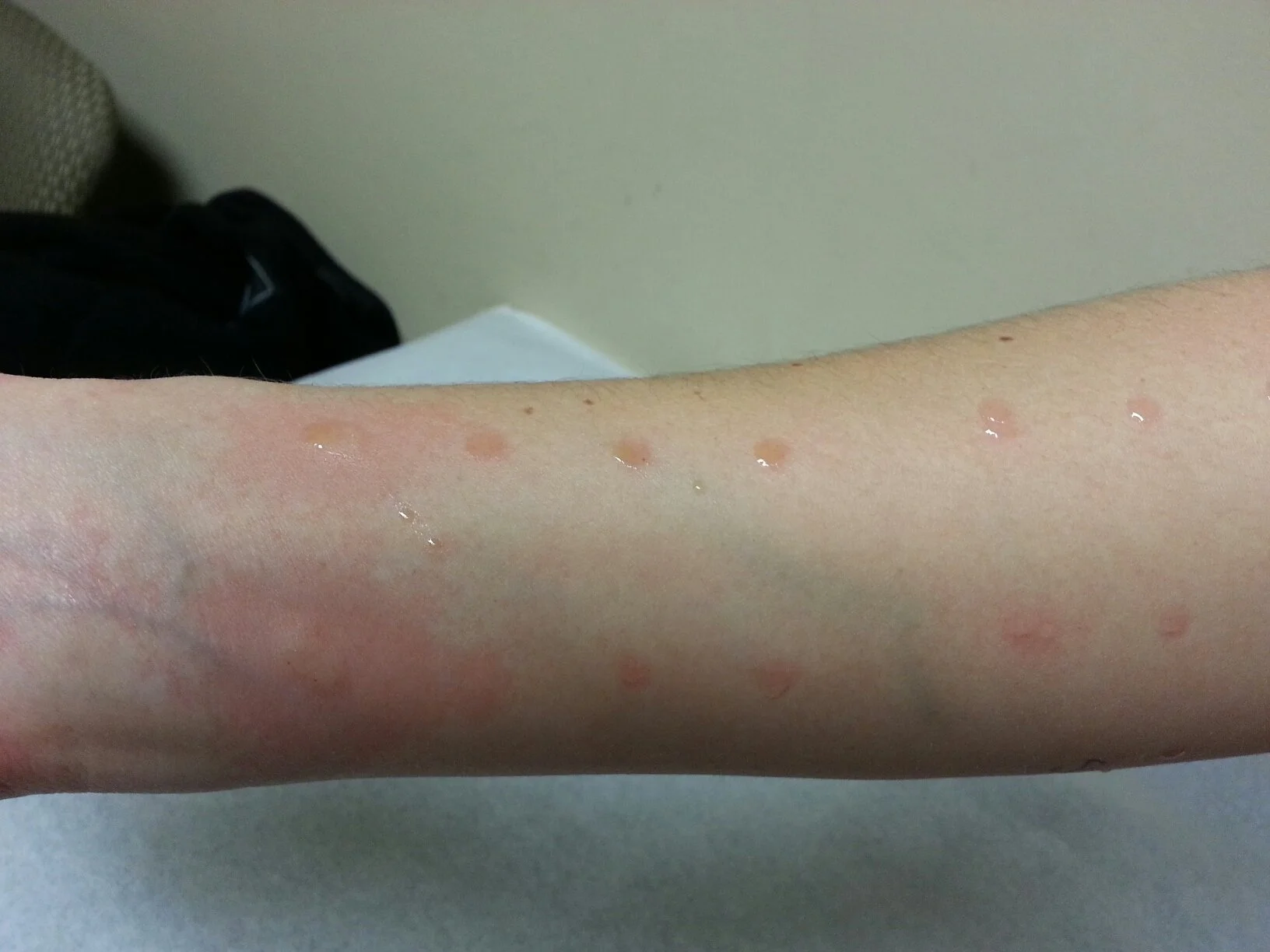
Allergy Prick Skin Testing
Praana Center for Asthma and Allergy
Dr. Samyukta Koppula, MD
Allergy prick skin testing is a common and reliable method used to identify allergic sensitivities. This testing may include evaluation for environmental allergens, foods, stinging insects, penicillin (PCN), and certain anesthetics, depending on your clinical history and symptoms.
Any additional testing beyond what is scheduled must be approved in advance. If you have questions or believe further testing may be needed, please contact our office prior to your appointment.
What is allergy prick skin testing?
Allergy prick skin testing helps determine whether your immune system reacts to specific substances. During this test, small amounts of suspected allergens are introduced to the surface of the skin to see if an allergic response occurs.
This testing plays an important role in diagnosing allergies and guiding treatment decisions, including avoidance strategies and long-term management plans.
How do you prepare for the test?
Proper preparation is essential for accurate results. Antihistamines and certain other medications can interfere with skin testing and must be stopped before your appointment.
Please check with your doctor before stopping any prescription medication. If antihistamines are not stopped as instructed, your test results may not be reliable.
Stop the following oral antihistamines 5 days before your appointment:
Atarax®, Vistaril® (hydroxyzine)
Claritin® (loratadine)
Allegra® (fexofenadine)
Clarinex® (desloratadine)
Chlor-Trimeton® (chlorpheniramine)
Dimetapp® (brompheniramine)
Phenergan® (promethazine)
Tavist®, Antihist®, Dayhist® (clemastine)
Xyzal® (levocetirizine)
Zyrtec® (cetirizine)
Combination cold and allergy medications such as Actifed®, Aller-Chlor®, Bromfed®, Drixoral®, Dura-Tab®, Novafed-A®, Ornade®, Poly-Histine-D®, and Trinalin®
Stop the following medications 3 days before your appointment:
Benadryl® (diphenhydramine)
Axid® (nizatidine)
Pepcid® (famotidine)
Tagamet® (cimetidine)
Zantac® (ranitidine)
Zyflo® (zileuton)
If you are taking an oral antihistamine not listed above, stop it 3–5 days before your appointment. Many over-the-counter cold and flu products contain antihistamines, so please read labels carefully (for example, Tylenol® Allergy or Tylenol® Cold & Flu).
Stop the night before your appointment:
Singulair® (montelukast)
Accolate® (zafirlukast)
Local antihistamines such as azelastine nasal spray or olopatadine eye drops
Important medication notes:
Some psychiatric medications, including tricyclic antidepressants, as well as certain sleep aids (such as Tylenol® PM, Advil® PM, and NyQuil™), may affect skin test results. Please inform our office if you are taking these medications. Do not stop psychiatric medications without consulting the prescribing physician.
Additional preparation instructions:
Stop all supplements 3 days before testing (discuss with your healthcare provider if needed)
Continue all other medications unless instructed otherwise
Inhaled, nasal, and oral steroids do not interfere with skin testing
Do not apply lotions or creams to your back or forearms on the day of testing
What happens during allergy prick skin testing?
During prick skin testing, a small amount of each allergen is placed on the skin—most often on the forearm or back. The skin is then gently pricked to allow the allergen to enter the top layer of skin.
If you are allergic to a substance, a small raised bump with surrounding redness will appear at that site. After a short period of time, each reaction is carefully measured.
A reaction of sufficient size suggests an allergy may be present. I interpret these results along with your symptoms and medical history to determine whether the allergen is clinically relevant.
How long does the test take?
Allergy prick skin testing typically takes 30–40 minutes to complete.
What should I expect on the day of my test?
Please arrive 15–20 minutes before your scheduled appointment to allow time for check-in. Our team will guide you through the testing process and answer any questions you may have.
If you have questions before your appointment, please contact our office.